Small Group
Best Time to Visit Japan: Seasons, Routes, and Planning Guide
Japan Planning Roadmap: The Dream, The Plan (you are here), The Booking


Every Japan trip is shaped by three decisions: when to go, which route to take, and how many days to give it. Get all three right and Japan opens for you. Start with the days you have. Everything else flows from there.
The Quick Answers
- Peak seasons: Late October to November for autumn color, late March to early April for cherry blossoms
- Trip length: 10 to 14 days for a first trip; 12 works for the widest range of travelers
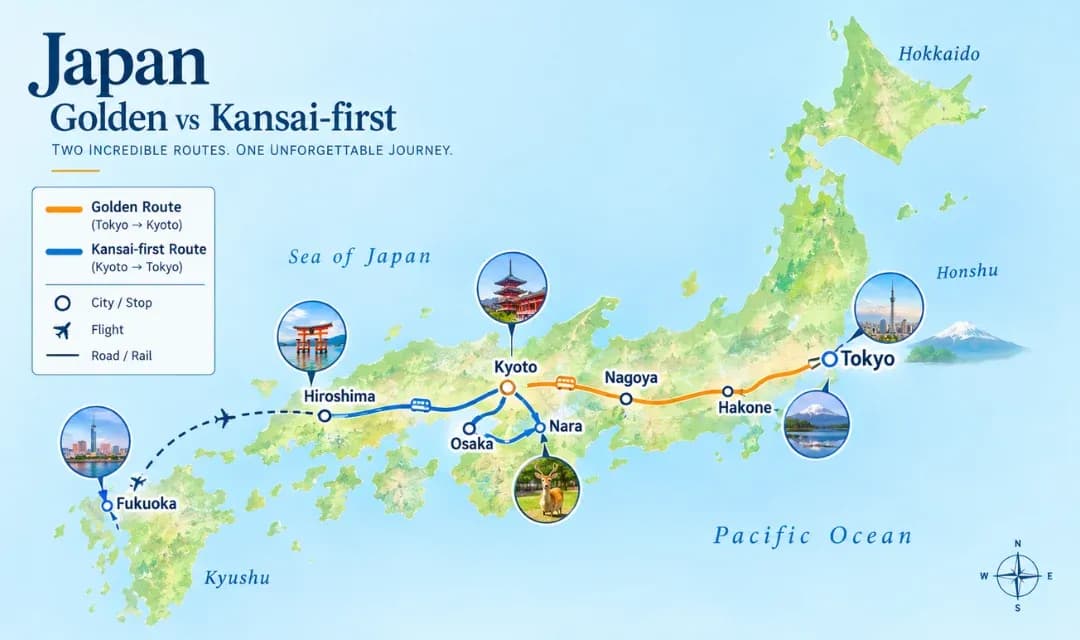
- Route options: Golden Route (Tokyo, Hakone, Kyoto, Osaka) or Kansai-first (Osaka, Hiroshima, Kyoto, Hakone, Tokyo)
- Underrated window: May and early June, quieter and warmer than most travelers realize
- Booking window: 9-12 months out for cherry blossom and autumn departures; 12-15 months for the best ryokan rooms
How Many Days You Actually Need
Seven days works as a focused city trip. Tokyo or Kyoto in depth, with a day trip or two out.
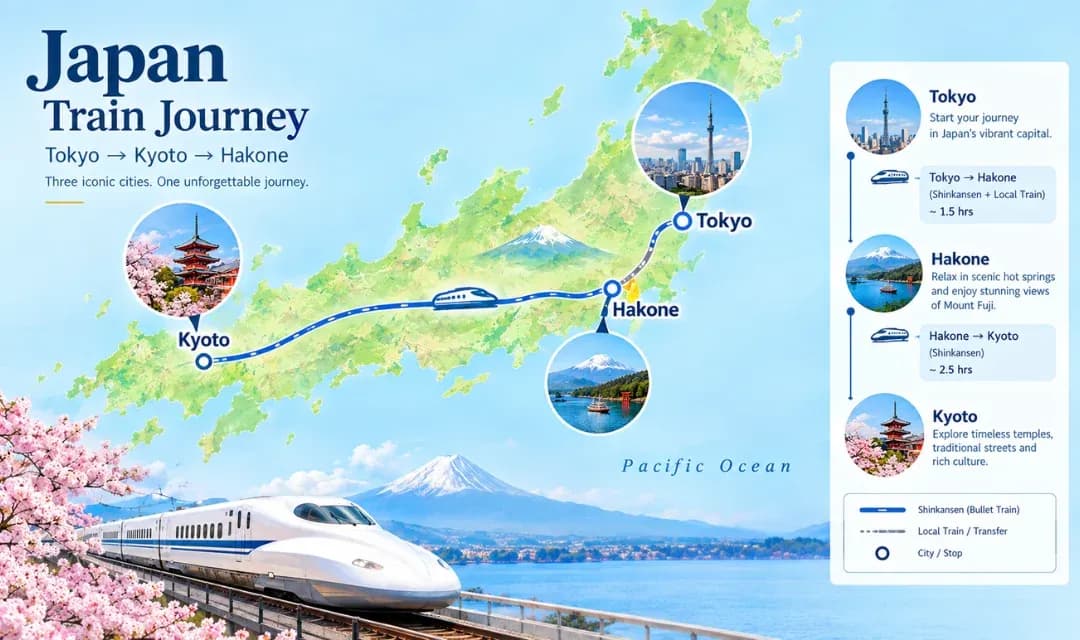
Ten to eleven days covers Tokyo, Kyoto, and Hakone at proper stay lengths. Three or four nights each in the two cities, one or two in a ryokan.
Twelve to fourteen days is the sweet spot. Adds space for Osaka and Hiroshima, or Kanazawa, or a second ryokan night. Twelve is the number a well-designed first trip lands on.
Fourteen days and beyond unlocks depth. Naoshima for contemporary art, Hokkaido for wilderness, Tohoku for classic rural Japan, Kanazawa for craft.
Choosing Your Route
There is no single right way through Japan. Two well-shaped options work for a first serious trip, and a third opens up for cultural depth.
The Golden Route (Tokyo, Hakone, Kyoto, Osaka)
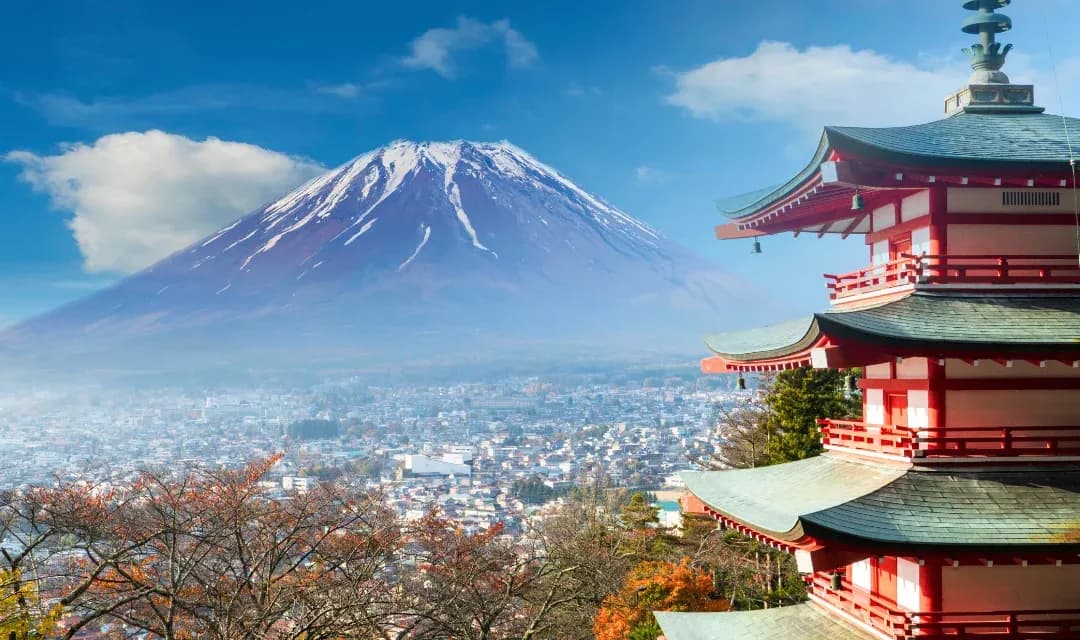
The classic first-timer route. Arrive Tokyo, three or four nights in the capital, a night or two in Hakone with a ryokan and Mount Fuji, then west to Kyoto for three or four nights with a day trip to Nara and a couple of nights in Osaka. Works cleanly in 10 to 12 days.
Best for: first-time travelers who want the essential Japan done well, travelers with limited time, and anyone whose priority is the country's headline experiences.
The Kansai-First Route (Osaka, Hiroshima, Kyoto, Hakone, Tokyo)
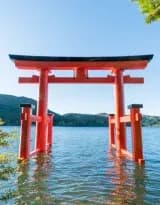
Fly into Osaka, work east to Tokyo. Two nights in Osaka on food and street markets, two in Hiroshima with Miyajima's floating torii, three in Kyoto, one in Hakone, three in Tokyo. Works best over 12 days.
Best for: travelers who want to include Hiroshima and Miyajima, first-timers with 12 or more days.
Our small-group Japan journey follows this exact route. Twelve days, sixteen guests maximum, an expert Pack Leader through the trip, and local guides at each stop. Check out the details in our Beyond the Ordinary itinerary and also other Japan itineraries.
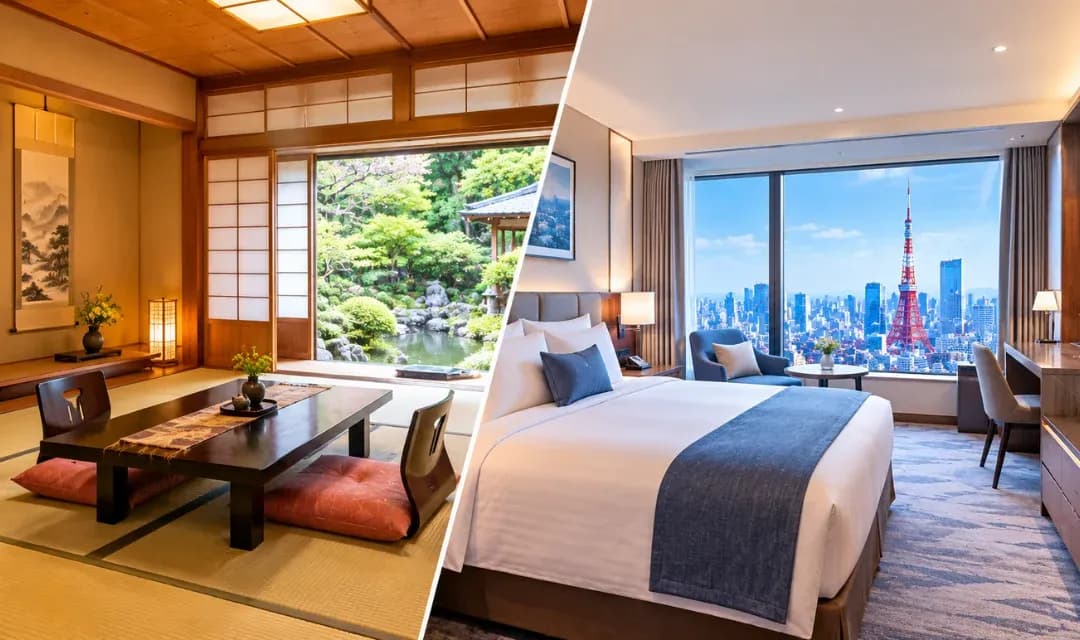
Where to Stay
Type matters more than location. Get the type right at each stop and the whole trip lifts.
Tokyo. A boutique in a walkable neighborhood (Ginza, Shibuya, Shinjuku, Roppongi) beats a transit-only district hotel every time.
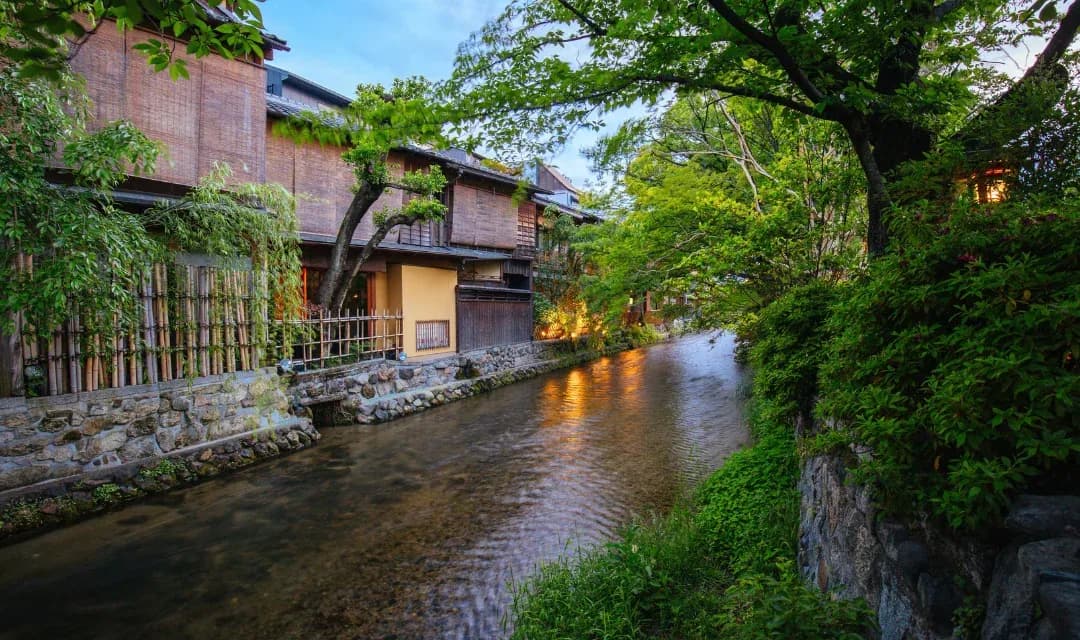
Kyoto. A boutique inside the heritage zones (Higashiyama, Gion) changes what you can do on foot and what your morning looks like. Central business hotels save money but can cost you the whole texture of the city.
Ryokan. A traditional Japanese inn with tatami, futon bedding, onsen, and dinner served in-house. One night reframes the trip, two is better.
Osaka, Hiroshima, Kanazawa. A well-run central hotel is right for the job. You are here for the neighborhoods.
Month by Month: When to Go
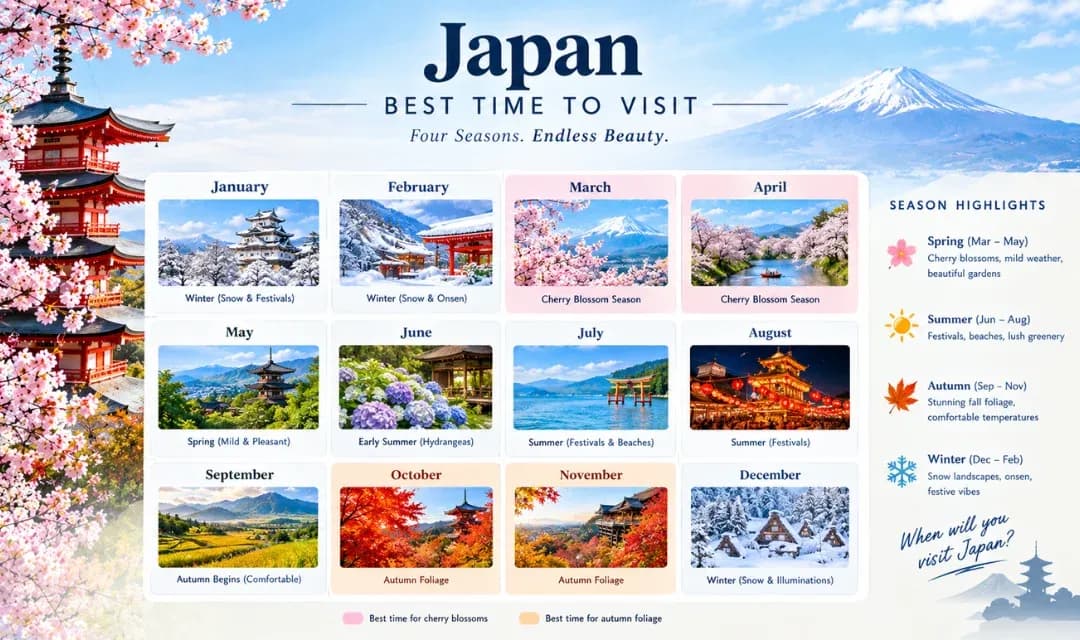
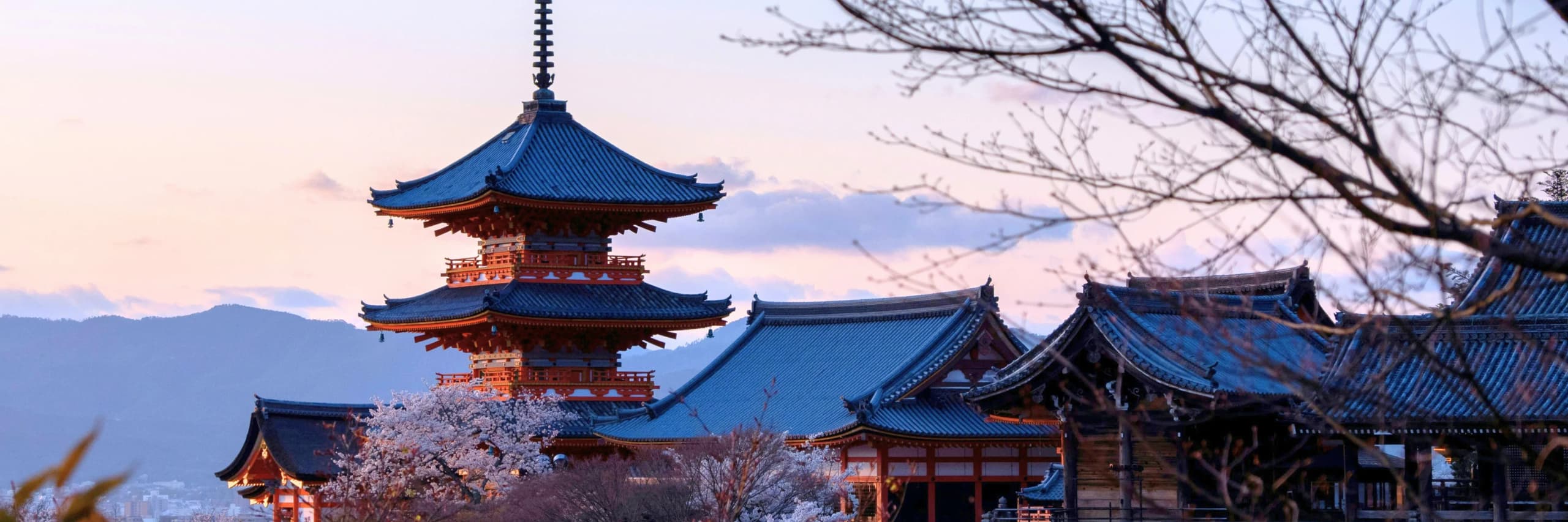
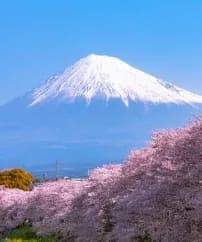
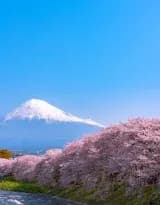
Late March to early April: Cherry blossoms. The most photographed Japan is now. Kyoto's temples framed in pink, Tokyo's Meguro River lit at dusk, the Philosopher's Path petal-strewn. The pull is real, the crowds are too, and hotel and rail prices run 30 to 50 percent above shoulder season. The sakura peak itself shifts by a week or two each year.
Best for travelers who have want cherry blossom as the highlight of the trip.
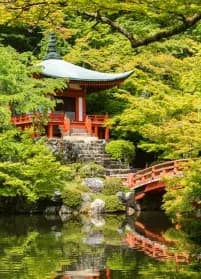
May and early June: The underrated window. Kyoto's temple gardens are at their greenest, the rains that arrive later in June have not begun, crowds are thin, and prices are gentle.
Late October to November: Autumn color. Kyoto's temple gardens turn every shade of red and gold. The light through the day is warmer than spring, and crowds are lighter than sakura season.
December to February: Snow country. Snow in Hokkaido and the Japanese Alps, onsen at their best, and the Tokyo and Kyoto that most first-time travelers never see. Skiing in Niseko, ice festivals in Sapporo, the monkeys at Jigokudani in Nagano.
Getting Around
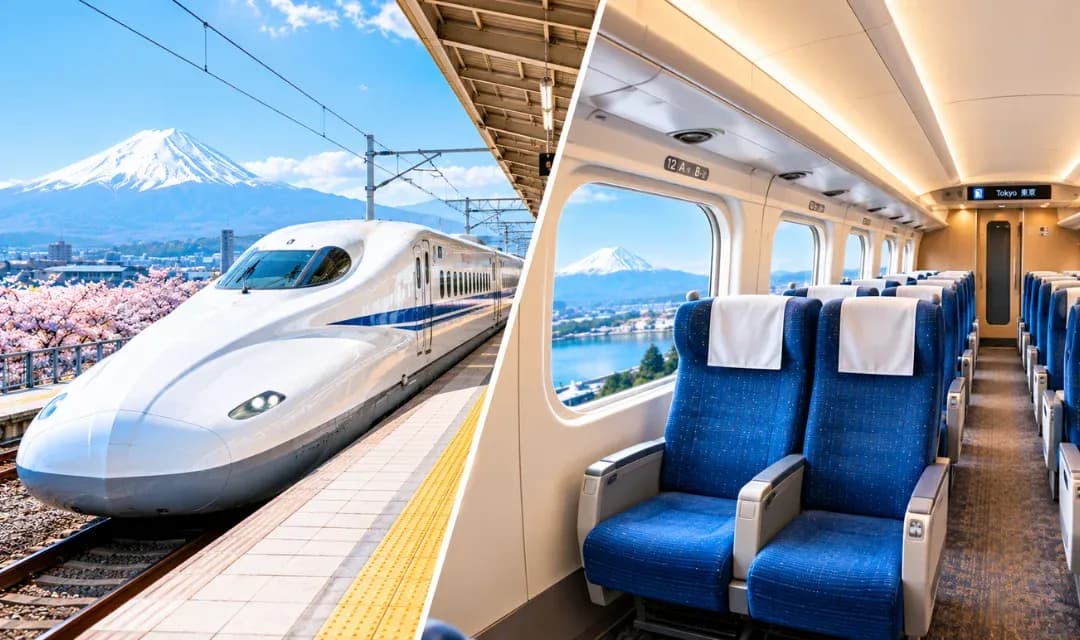
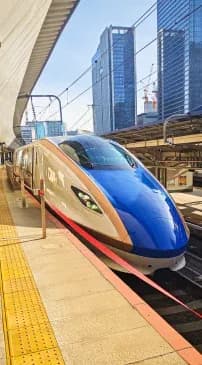
The Shinkansen connects Tokyo, Kyoto, Osaka, and Hiroshima on the timetable a considered itinerary needs. The Japan Rail Pass makes sense for longer, complex routes; for shorter trips, individual tickets often work out cheaper after 2023 pricing. Luggage forwarding (takkyubin) lets you send your main bag ahead and travel with a carry-on.
On a Travelopod Journeys trip, everything is taken care of—bullet train seats, seamless transfers, luggage handled between stays, and a journey designed end to end. All you need to do is experience Japan.
Call +1 844 770 7948 or write to journeys@travelopod.com to begin.

How We Shape Japan Around You
Every Japan trip is shaped by a few core choices. Season, pace, depth, and the kind of experiences you want to prioritize. When these align, the country opens in a way that is magical.
If your focus is atmosphere and photography, the choice often sits between cherry blossom and autumn. Spring carries the pull of sakura; autumn offers the same visual drama with fewer crowds and more flexibility.
If your priority is cultural depth, time in Kyoto becomes central. The difference between a brief stop and a properly paced stay changes how the city reveals itself.
If you are drawn to stillness and contrast, a ryokan stay becomes integral to the experience. It is less about accommodation and more about how the journey pauses and resets.
If your trip is tightly timed, routing decisions shape everything. Arriving in one city and departing from another can quietly return a full day to the journey.
If you prefer to move through Japan without friction, then logistics—trains, transfers, timing—need to be designed, not managed on the go.
And if what you value is ease without losing depth, then the structure of the trip shifts again—towards guided experiences, local access, and a pace that holds everything together.
There is no single right way to do Japan. There is only the version that fits how you want to experience it.
We’ve shaped these journeys to know what works and how to match it to what you’re looking for. If you’d like to think it through, even at a rough, early stage, reach out at +1 844 770 7948. We’re happy to brainstorm with you.
Every trip earns Travelopod Circle membership, 1% in member rewards toward your next journey.
Still deciding on Japan? Read the <dream stage guide>
Frequently Asked Questions
Is Japan expensive to visit? Less than it was five years ago. The yen at generational lows against the dollar has moved the calculus on ryokan, fine dining, and rail travel. A well-planned luxury Japan trip is often comparable to Italy and below Iceland or the Nordics.
Do you need to speak Japanese to travel in Japan? Tokyo, Osaka, and the main tourist areas run in enough English for a self-directed traveler to manage. Signage in stations and on trains is bilingual. Outside the main cities and off the tourist trail, English thins fast. A good local guide or Pack Leader is what most travelers rely on outside the main hubs.
Do you tip in Japan? Tipping is not customary and can occasionally cause confusion. Service is included and staff take pride in delivering it as part of the job. The exception is private guides on multi-day tours, where a thank-you gift or envelope at the end is appropriate.
When is Japan's rainy season? Mid-June to mid-July across most of the country (tsuyu). Hokkaido escapes it. September brings occasional typhoons, mostly to the south and west. Both windows still work for travel but compress outdoor plans.
Do you need a visa to visit Japan? US passport holders can enter Japan visa-free for stays up to 90 days for tourism. Passport validity of at least six months beyond your intended stay is standard.
ExclusiveOur Signature Journeys
View All >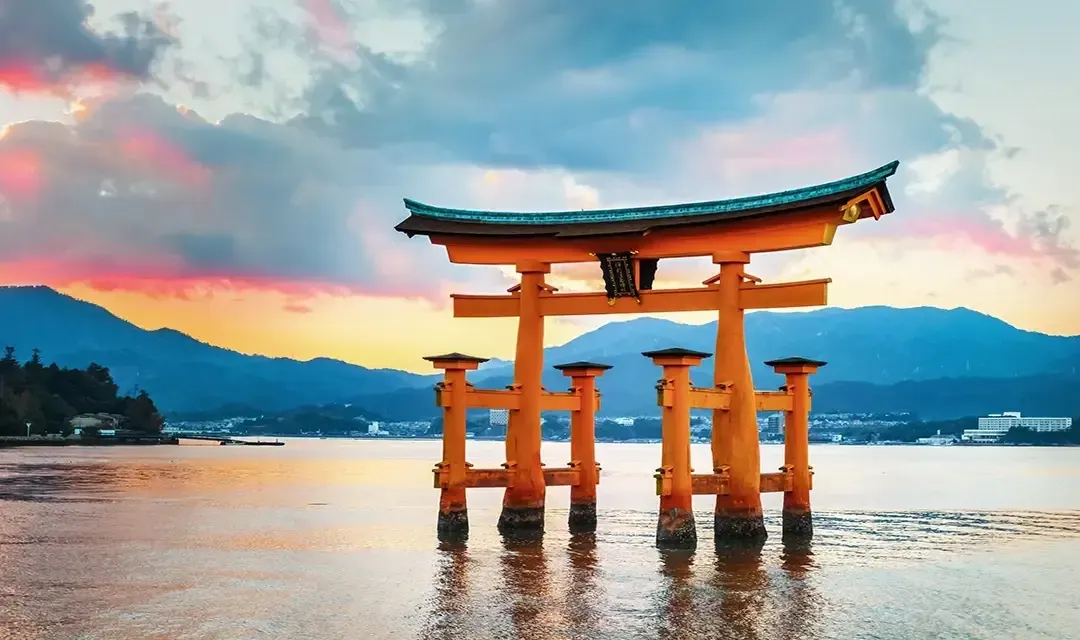

Why Choose Travelopod
Travelopod makes every journey seamless, affordable, and unforgettable. Here's why travelers choose us for flights and vacations.
Your Next Adventure Awaits


Meet Our Special Advisors
Our trusted advisors bring decades of expertise to help plan your perfect journey.

Anna
Holiday Expert

Vic
Holiday Expert

Suzane
Holiday Expert
Get Holiday Inspiration & Exclusive Offers
Join our mailing list to receive the latest updates and travel inspiration
We respect your privacy. Unsubscribe at any time.